
by Ash Kestler
Zaide Smith’s, On Beauty complicates the ancient and contemporary notions of aesthetics. She also examines the failure of academics and politicians, through Howard Belsey and Monty Kipps, to understand the aesthetic experience within race related issues. One pertinent aspect, which is relevant, though may or may not have been for Smith herself, is the current divide between aesthetic and political study. These two philosophies are emerging indepedantly, without creating an interdialog. Smith's characters and notions of beauty are revealed as aspects of race and mixed race, that are not typically considered when constructing a new racial project. G. Reginald Daniel is one such example of an academic who provides a political theory to form a new and expanded racial experience, yet does not account for the aesthetic experience of racialized people who endure these formations and re-formations of racial ideologies. It is important then, to examine the role of aesthetics and beauty in racial formation and understand why it is necessary to include these notions of beauty and undertand their exclusivity in racial projects. On Beauty forces the issue of beauty to be contemplated and forces her audience to question the academic and political realm that dictates beauty and worth. Daniel, while he addresses the problematic state of whiteness, meaning racelessness, he fails to account for this state of racelessness as being a place of value and undue superiority, aesthetically, politically and intellectually. However, consideration of the aesthetic experience for racialized people, renders his goals for democratic participation in the American Dream difficult without retooling America’s aesthetic cognition.
Daniel argues that white racism, or the idea that whiteness is un-raced, is rooted in European American “individualism, merit and standards of excellence associated with the American Dream.”(Daniel 288) Daniel fails to account for historical residuum of slavery, the free labor, which helped elevate the capitalist dream. The enslavement and diaspora supported a cyclical system of economic impoverishment in return for a few men’s prosperity. As Smith also points out, residual racism is still alive and systematically supporting hierarchies of beauty that are maintained through academic and commercial pitches of top investors. Meanwhile, economically oppressed, and racially determined people have been left abject or ‘ugly’ even in contemporary cultural topoi. Perhaps, from intersecting Smith and Daniel, there will emerge the most important reality. If one is calling on the American Dream as salvific inspiration for solving the ‘race problem’ they must examine the aesthetic role that places race where it does. The American Dream is supported by very detailed contract of beauty, negotiated between mass media and society, intellectuals and creators of art. Things that sell make up the American Dream. One of the critiques of Daniel’s argument is that participating in American individualism asks African Americans and other racial groups to assimilate into mainstream society. Much like Carl gave into the feeling of satisfaction when Claire offered to refine his ‘street poetry,’ Jerome had “given himself up” to the Kipps family. This surrender leads Jerome to think of blackness as an “accidental matter of pigment,” and “vowed to think less of his identity in the future.” (Smith 44) In essence, democratic individualism can be seen as a ‘civilizing’ element, and has a long history of failing America’s progress on equality.
America has a history of utilizing black performance to support white patriarch and patriotism.[1] The commercialization of Black contributions in American performance has in some ways stemmed through vaudeville shows, blackface and minstrelsy.[2] While at one end, some of the most famous performers, who performed in blackface, like Bert Williams enriched African American music and performance, they also became controversial characters. In the context of art, Du Bois found minstrelsy disturbing as he did not care for “any art that [was] not used for propaganda,” but did care, “when propaganda [was] was confined to one side while the other is stripped silent.” (Criteria of Negro Art 94,)[3] The minstrel is “just the kind of rapper white people get excited about,” (Smith 238) “ a shell of a brother,” (Smith 389) says Levi about Carl. Disagreeing with Zora because Carl's music is for a crowd racially different than Carl, who is black and becasue the aesthetic of his music is not seen as being authentic because it lacks “suffering.’ (Smith 238) Alongside this statement, Levi means to call his sister, Zora white in effect of praising Carl’s white music. More interesting is that Zora avoids calling it rap music, instead giving Carl a more sophisticated and academic definition: lyricist and narrative poet. (Smith 239) Carl’s rap exemplifies how a certain aesthetic is construed as being related to a specific race. Smith problematizes this notion by incorporating the opinions of Zora and Levi who have the same genetic make-up but aesthetically and culturally relate to different identities.
Claire’s project to “refine” (Smith 232) Carl’s music, turning his rap-poetry into Shakespearian sonnets, can be seen as a process of civilizing or assimilating Carl by coercing him to express himself in a mainstream and acceptable aesthetic mode. Smith employs this lens to show how the academy, which he had chosen to ignore is still trying to civilize his work, to make it meaningful to them (academics who in On Beauty are mostly white.) For Zora, Carl is a spectacle, a project and an entertaining “fool,” (Smith 414) Ironically, while she praises him she is also afraid that he will rob her families jewelry and safe. (Smith 139) Smith, here, reveals the dilemma of being used by the ‘intellectual’ masses while at the same time being feared by them.
Carl seems all too much like a contemporary minstrel, although, it does not seem intentional on his part. When the Belsey’s first meet Carl, he has a “winning smile,” (Smith 77). When he knocks on the door to meet Howard, he is described as “pretty, too pretty like a conman…languid, muscled…black” and “smiling.” (Smith 105) Smith also states “it’s remarkable what a face like Carl’s makes you want to do in order to see it smile again.” Of course it is not uncommon to see people smile, however Smith depicts Carl at first as a very happy, young black performer. Carl eventually comes to his own realization that he was Wellington’s and specifically Zora’s fool. "You been making a fool of me since the beginning, “ he says. “Is that it? You pick me off the streets and when I don’t do what you want, you turn on me?” (Smith 414)
Smith also points to the problematic history of minstrelsy, when she depicts Jerome miming a “minstrel’s expression to match his mother’s intonations.” (Smith 45) Smith associated Jerome’s expression with Kiki’s perception of his face, which she describes as “unpretty – pulled forward, as if in sympathy with the long, horse’s lashes that curled up to meet it.” Smith also feminizes him by depicting his “womanly mouth” forming into a “pout and this in turn accentuating his families cheekbones.” Seemingly, this is the description of blackface. The most problematic aspect of Daniel’s argument is that while he recognizes the isolating effects of twoness, he fails to address how this twoness has been used as an aesthetic measure in assimilation and minstrelsy. The face of blackness has surely been reproduced in forms that promote academic, racial and financial gain, but always at the cost of lessening, if not making insignificant the beauty of blackness and everything in-between. Daniel argues that individuality will aid the ecomonic growth of American minorities, but how is this so when artistic individuality is being curbed and assimilated to perpetuate white racial dominance?
Through Kiki’s character, Smith comments on beauty as an aesthetic experience, much like race has been examined as a historical experience. When Kiki randomly meets Warren and Claire Malcom[4] at Wellington’s Town square Smith contrasts Warren’s “neatly muscular blue-collar New Jersey body,” (Smith 51) and Claire’s “pre-pubescent,” and “neatly made” body, adding that she was made with “minimum material.” These descriptions contrast Kiki’s large size and feeling of abjectness- a feeling opposite of beauty but not quite ugly. Smith explores Kiki’s rejection of her self as beautiful, an how her existence is complicated by experienceing blackness in a "sea" of Wellington whiteness. As a black woman, she feels that she is “no longer in the sexual universe – when you are supposedly too old, or too big, or simply no longer thought of in that way...” (Smith 51) Kiki’s dilemma resigns her to an inability to fit into a’ needed’ sexual niche in within the Wellington environment. Claire Malcolm embodies the ideal Wellington female, who is an academic and Howard’s sexual detour, filling that sexual space that Kiki cannot. Kiki's displacement causes a self-rendering of insignificance.[5] Smith’s images of Kiki as being disproportionate and large signify disorder or bodily disharmony.[6] Kiki's aesthetic experience is embodied by Claire’s demeaning comment to Kiki, “God, you look great, Keeks. You should be in a fountain in Rome,” reminding that the scale of beauty is an ancient Greek scale that is based on exclusivity and Eurocentrism. Smith’s irony here is that Kiki’s beauty is constantly being judged on a Eurocentric scale. Roman fountains are the places of white goddesses not, voodoo queens. This is one aspect of racial injury (Cheng 195).
Smith attaches Kiki’s body and the aesthetic understanding of it, emphasized by Warren and Claire’s over-flattery (and therefore lack of sincerity),[7] to a cultural and historical image. To “white American boys,” Kiki states, “I’m the Aunt Jemima on the cookie boxes of their childhoods, the pair of thick ankles Tom and Jerry played around.” (Smith 51) Ironically, society’s conceptualization of Kiki’s beauty is much different outside of Wellington; wherein Smith infers that what is not beautiful in one context can be very attractive in another. In Boston she could “barely be left alone,”(Smith 51) by young black men who ask for her phone number while in Wellington her husband is sleeping with a white woman. However, it is often the role that beauty plays inside the predominately white community for Kiki that causes racial injury (Cheng 195) rather than outside it.
Howard’s perception of Kiki as a chubby Picasso water-carrier (Smith 12) and Kiki’s observation of what she must look like to others – “like a maid in an old movie,” (Smith 98) provides a very distinct stereotype of the obese black woman that was popularized in Gone With The Wind. Pointing to this physical image complicates Daniel’s argument to expand racial categories in order to promote inter-racial individualism and democracy, because Kiki’s problems and identity are not just politically and racially organized, but also organized by a very specific aesthetic experience. For example She is exoticized, and marginalized as a one-dimensional character at times. Veronica calls her an African Queen, (Smith 313) insinuating that her only beauty lies in her own exotic appearance. Similarly, Kiki relates to the painting of “Maitresse Erzulie” the “voodoo goddess” that appears at first as exotic and one-dimensional but has many layers of symbolism. (Smith 175) This is ironic since Vee has to struggle as well with projecting more than just an aesthetic perception. Her body is described in overtly sexual and exotic ways and by the end she needs to tell Howard that she is more than just a body. However, Howard is given the privilege of being raceless and privileged to dictate beauty and politics. Smith points this out persistently between his adamancy stop the democratic process of free speech to save liberal education, to dictate what has meaning and what does not in art and music and to specifically to fail as a father and a husband because he does not realize how the experiences of beauty and self-depreciation of those around him, are in some way developed by him.
Daniel discusses white privilege that was extended to European-Americans after turning in their hyphenated doubleness for singular whiteness. This twoness is what African American’s and other hybrid people still must vie against. Daniel argues that racelessnes is the privilege or “structural edge” (Daniel 289) the European Americans have in the pursuit of the American Dream,” which leaves white people “not even having to think about the fact of one’s race.”(Daniel 288) Between Howard and Kiki, the racelessness of being white and the experience of being black clash. Kiki’s anger regarding Howard’s affair was not harnessed until she realized Howard had slept with a “tiny little white woman” that she could fit in her pocket. (Smith 206) Howard misunderstands and tells her she is “ludicrous” as it makes no sense why a white woman would be different than any other woman in matters of his affair. Kiki responds, “…I don’t know why I’m surprised. You don’t even notice it – you never notice…everywhere we go, I’m alone in this…sea of white.” His ignorance is accentuated, when she accuses, “you think it’s normal…my whole life is white. I don’t see any black folk unless they be cleaning under my feet in the fucking café in your fucking college.” The fact that Howard equates whiteness with “normal” strengthens Daniel’s argument about the problem with whiteness, and the aesthetic argument regarding transparency.
Daniel assumes that individualism will replace inter-race testing with a “more dynamic notion of communion.”(Daniel 289) He explains how opening up to a postmodern “shift in consciousness,” inclusive of the “party, mostly, or both/neither and…shades of gray,” (Daniel 286) will aid the expansion of racial categorizing. In Daniel’s idealistic notion of an ultimate race spectrum, he fails to address his own invocations of skin color or “greyness.” Greyness is a politically correct way of confronting the notion, not just of race mixing but also of color mixing. It is not apparent that Daniel was actually using greyness to account for a color spectrum, he was using it more to describe the many variations (cultural, color, ethnic) with in a race or mixed race people, but the notion of color is there, inherently since grey is a color on its own. There is also a skin color spectrum with in the characters in On Beauty. Smith infers the Zora’s skin is lighter. Howard is white and Levi is darker, Jerome looks more like his black mother Kiki, and Victoria is exotically black. Erskine, the head of the Black studies department, however he is described as having freckles and looking benign. Smith problematizes race, by giving Erskine a black man a benign face.
Daniel uses Du Bois to show how African Americans have bonded through isolation, exclusion and the unique experience of twoness.[8] Daniel states that Du Bois concept of race, which he accepts, provides a “springboard for a renewed national sense of community.” (Daniel 288) Du Bois also praises individualism as well as having access to elite culture, or as Daniel says the “American Dream.” Daniel goes as far to say that abandoning the American Dream would cause racial divides to widen. (Daniel 290) For Daniel’s sake, he had to loose Du Bois in this section of his essay because Du Boisian elitism and Daniel’s American Dream, while intersect at many points, stem from two separate political and aesthetic practices. For Du Bois, “the great promise of Democracy” taps the “unused and unsuspecting reservoirs of human greatness,” (Against Racism 242, Polock 504) or African Americans. Du Bois also describes this process of “freedom” as “the path of art and living in the fuller broader sense of the term is the expression of art.” (Writings 1060-61, Posnock 504) Polock understands Du Bois’ ‘life as art’ motif to mean that the aesthetic experience will be the “condition of human freedom,”(504) not solely democratic individualism. Smith, while meaning to or not, locates On Beauty in between the aesthetic experience of art and the failure of American politics regarding racial issues. She depicts Howard as a character who is in academia and therefore allowed to dictate aesthetic philosophy on Rembrandt (art) and people, while at the same time he is privilege in questioning the democratic politics of Wellington. He does this through arguing Monty Kipps about his agenda in taking the “liberal out of liberal arts.” However, Howard represents Du Bois fear manifest, and the problematic politic of Reginald Daniel, and fails to connect beauty to race, aesthetics to politics.
The irony lies in Howard’s classroom, where he asks:
What we’re trying to interrogate here is the mytheme of artist as autonomous individual with privileged insight into the human. What is it about these texts – these images…that is implicitly applying for the quasi-mythical notion of genius. (Smith 252)
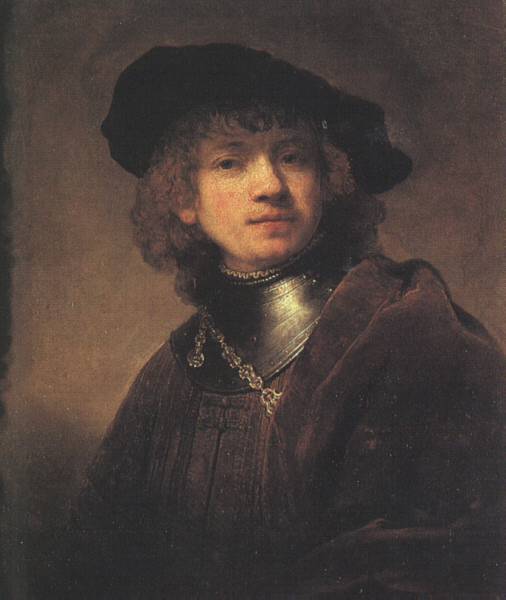
Through Howard, Smith asks a question that forces an interrogation upon Howard’s position in society as a white man who believes that he produces new ways of thinking so others can “think it,” (Smith 120) by calling out the defects in labeling someone a genius. In effect the debate over Rembrandt, liberal education and beauty, especially over the Self Portrait (Smith 28) is actually debate over Howard’s undue privilege of controlling aesthetic thought. When he asks, “What are these images really concerned with?”(Smith 252) it seems that Howard should now the answer, however Smith develops Howard as a parody of the intellectual bourgeoisie,[9] who does not understand beauty and it’s effects on the human condition, yet lives with in an aesthetic system where beauty is attached to historical meaning. In this system Zora is more white-looking thus she is more academic, and because Kiki is black and less privy to intellectual understanding; Claire is white and she is the poet, poet (Smith 77), while Carl is black and he a “street poet.” Another example is presented when Howard confronts Levi about his “head stocking business,” assuming that it is “an aesthetic thing…for looks only,” (Smith 22) and fails to understand how Levi is connecting a specific look to his notions of blackness.
Howard’s Self Portrait is metaphorically explored when the “lecturer in aesthetics” (Smith 19) enters a photo booth. The three photographs allude to Howard’s failure to “see.” First with the blinding flash, then with his hair in his eyes and on the third try he “tried to challenge the camera” and the “result was something yet more insecure.” (Smith 32) Perhaps this is Smith way of revealing a white person’s refusal to see their own race and the privilege that has become synonymous with whiteness. Smith points to Howard as a raceless person and aesthetically “inverted,” characterized as “boring” and “obvious” (Smith 433), transparent [10]and repetitively falling into predictable, redundant affairs. Beauty is something that fulfills the need to be “surprised and astonished” however, when Howard’s academic snobbery and sexual meandering become” repeated, they may lose their aesthetic attraction.” (Lorand 404) Howard also has to contend with the privilege of being white, which goes often as an “unmarked racial category.” (Daniel 288) Smith never places an image of determinate beauty on Howard, making his aesthetic image whiteness itself. As well, Smith doesn’t deem Howard as necessarily ugly but boring, not because of his whiteness, certainly Claire has personality, but as the ultimate academic, which seems to be the antithesis of beauty in this novel. Zora, being used to show insider knowledge of the academic environment of Wellington often defends her father’s affairs attributing it to the typical academic lifestyle. Smith illustrates the typical behavior of Howard through Zora in a conversation with Carl; she tells him “What kind of a sophisticated guy in his fifties doesn’t have an affair? It’s basically mandatory.”
Smith points our how aesthetic experiences may vary with in a race by polarizing Kiki as Aunt Jemima and Victoria as the exotic Nefrititi (Smith 123) and polarizing aesthetic politics: the liberal versus the traditionalist. W.E.B Du Bois, alternatively, attempted to navigate the political and aesthetic simultaneously, arguing that “pragmatism can mediate between the aesthetic and the political and help move us beyond this constricting dichotomy [double consciousness]” (Posnock 502) Daniel evades any mention of the aesthetic dilemma, which ultimately complicates the location of a place for racialized individuals within specific democratic strati, since certain aspects of racial stratification have been perpetuated through aesthetic hierarchies. Smith offers an idea, more transcendent but still aesthetically rooted, and that is to expand, if not reinscribe notions of beauty onto racialized people, as political and academic methods have failed to open societies understanding beauty. The transformations of the Belseys by the end of the novel complicate previous understanding of art, beauty and intellect, inferring that there is more to beauty that simple object-subject relationships, but moral, ethical and political dilemmas that cannot homogenize to fit “blackness” or “whiteness,” or even in all its cultural variations as a uniting thread, which are thoroughly represented by the Belseys and their three very incongruent children. However, what remains, is the self-depreciation, often ties to the body, that occurs when intellectual white men dictate what is beautiful and what is not, what is “high’ art and intellect and what remains as “low” aesthetic value. Smith complicates Daniel’s democratic racial understanding because it does not account for the retooling of America’s understanding of aesthetics and by ignoring concepts of beauty and how they relate to race, academia will commit Howard’s fallacy.
[1] Du Bois and the Minstrels, by Scott HerringMELUS © 1997 The Society for the Study of the Multi-Ethnic Literature of the United States (MELUS)
[2] Brody, Jennifer De Vere. “Memory’s Movements: Minstrelsy, Miscegenation, and American Race Studies,” American Literary History, vol. 11, No 4. 1999. pp 741. Brody sites W.T. Lhamon’s idea that minstrelsy was aided in “the mediating role of the market place
[3] Also cited in Scott Herring, Du Bois and the Minstrels MELUS, Vol. 22, No. 2, Popular Literature and Film. (Summer, 1997), pp. 3-17.
[4] Claire Malcom had an affair with Howard, Kiki’s Husband, at this point of the story Kiki is unaware of that affair.
[5] Ruth Lorand, Beauty and Its Opposites. The Journal of Aesthetics and Art Criticism. 1994, The American Society for Aesthetics. Lorand examines insignificance as a one aspect of the “negative pole” of aesthetic “displeasure.” Lorand creates a spectum of what constitutes the non-beautiful to fill a void of lack of sufficient comment on how beauty is negated and that this lack undemines aesthetic study by not giving “a complete account.”
[6] Ruth Lorand, Beauty and Its Opposites. The Journal of Aesthetics and Art Criticism. 1994, The American Society for Aesthetics. Disharmony and disorder contstitues “ugliness” which is the first “opposite of beauty.” Lorand duly notes that “what may seem ugly in one contex may seem beautful in another.”
[7] “An insignificant, well-organized object is often cute, pretty lovely, or decorative but not startling beautiful,” Ruth Lorand, Beauty and Its Opposites. The Journal of Aesthetics and Art Criticism. 1994, The American Society for Aesthetics. Kiki is referred to as: pretty, lovely, great
[8] Daniel’s explanation occurs on in Mixed Race Studies: A Reade, pp 288, but I feel to understand the true essence of Du Bois double consciousness theory, turning to page 8 and 9 in The Souls of Black Folk is best.
[9] It can also be said that Zaide Smith parodies E.M. Forster’s Howard’s End where a major critique of the middle-class, intellectual bourgeoisie also appears.
[10] To the reader as Smith’s narration allows the reader to know aspects of Howard that the characters in the novel are unaware of and he is also white and therefore ‘raceless’
Works Cited:
Du Bois and the Minstrels, by Scott HerringMELUS © 1997 The Society for the Study of the Multi-Ethnic Literature of the United States (MELUS)
Brody, Jennifer De Vere. “Memory’s Movements: Minstrelsy, Miscegenation, and American Race Studies,” American Literary History, vol. 11, No 4. 1999. pp 741
Ruth Lorand, Beauty and Its Opposites. The Journal of Aesthetics and Art Criticism. 1994, The American Society for Aesthetics.
Smith, Zadie. On Beauty. 2005, London
Cheng, Anne. "Wounded Beauty: An Expository Essay on Race, Feminism and the Aesthetic Question." Tulsa Studies in Women's Literature, Vol 19, No. 2. 2000, pp 191-217
Posnock, Ross. "The Distinction of Du Bois: Aesthetics, Pragmatism, Politics, American literary History. Vol 7, No. 3. Imagining a National Culture. 1995. pp 500-524
Daniel, G. Reginald. "The New Millennuim: Toward A New Master Racial Project and Epilogue: Beyond Black or White: A new United States Racial Project." Mixed Race Studies, A Reader. 2004, pp 283-93

